

Table of Contents
- Choosing Pumpkin Varieties to Grow
- When to Plant Pumpkins
- How to Plant Pumpkins
- How to Care for Pumpkin Plants
- Companion Plants for Pumpkins
- How to Harvest and Store Pumpkins
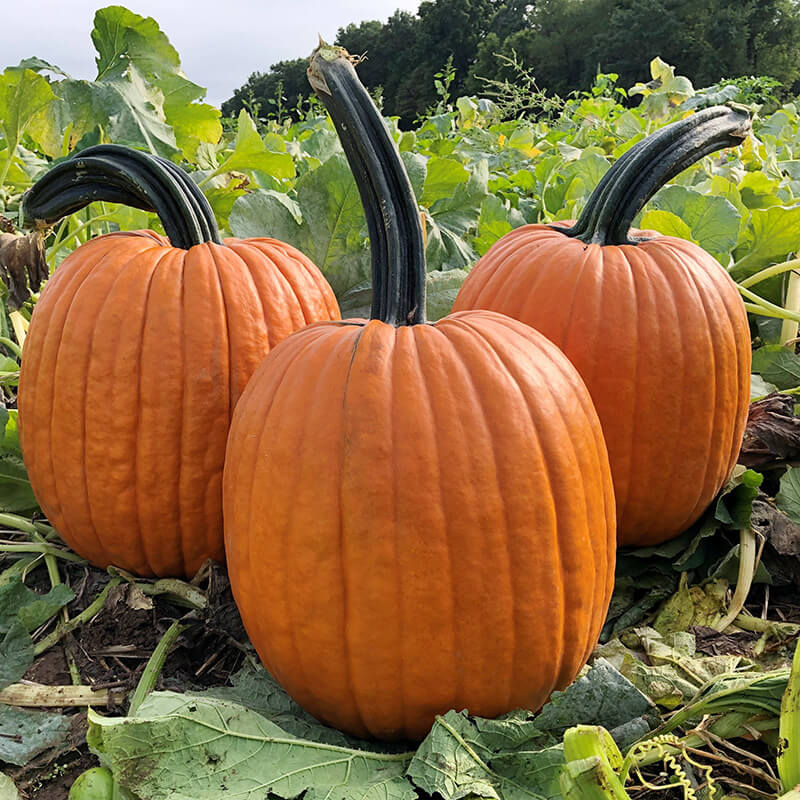
There’s hardly a more rewarding plant to grow than pumpkins. Ranging in color from orange and pink to blue and green, there’s something so enchanting about autumn pumpkins for children and adults alike.
While growing pumpkins from seed might seem like a daunting task, it doesn’t have to be — they're one of the easiest vegetables to cultivate and maintain with the right pumpkin-growing tips! Whether you’re looking for a pie pumpkin or the perfect pumpkin to accentuate your fall decor, read on to learn how to grow pumpkins and harvest the perfect one.
What Pumpkin Plants Look Like

There are a variety of pumpkin seeds available, so how do you know which ones to get? First, decide what purpose your pumpkins are going to serve. Will you use your pumpkins for cooking and carving, or are they meant to be decorative?
Pumpkins come in a range of colors and sizes.

Edible and Pie Pumpkins
There are pie pumpkins like Long Island Cheese and classic orange carvers and the thick-handled Secretariat F1.
Miniature Pumpkins
Miniature white pumpkins like Baby Boo pair nicely with the smoky Blue Doll F1.
Textured Pumpkins
There are even textured pumpkins like Warty Goblin F1 that are sure to set the perfect vibe at Halloween.
Short Day Pumpkins
Short-day pumpkins, like Early Abundance F1, mature in 100 days or less, making these cultivars perfect for colder regions with a shorter growing season. Some pumpkin seeds are even treated against certain diseases like powdery mildew, Indian Doll F1 being one.
Organic Pumpkins
Organic varieties like Winter Luxury Pie are plants grown without synthetic fertilizers, pesticides, fungicides, or other manufactured chemicals during harvesting and processing.
With such a wealth of heirloom and hybrid varieties available, there’s bound to be the perfect pumpkin (or two, or three) for the whole family to enjoy.
Additional Resources for Choosing Pumpkin Varieties:
- Top 5 Large Orange Pumpkin Varieties
- Top 10 Pumpkin Varieties
- Top 10 Pumpkin Varieties for Roadside Stands
- Pumpkin Grower's Panel
When to Plant Pumpkins
Pumpkins are warm-season crops that do not tolerate frost. These heat lovers prefer fertile soil that has reached at least 70 degrees Fahrenheit, so wait to plant your pumpkins until all danger of the last frost has passed.
In temperate climates, pumpkins can generally go outside from mid-May to early June. If you live in a colder climate with a shorter growing season, your pumpkins may benefit from being started indoors.
Start pumpkin seeds indoors two to three weeks before the last spring frost.
Sow the seeds in 2-inch or 4-inch pots to give the seedlings room to grow without becoming rootbound. Plant one or two seeds in each pot, and water them regularly.
Pumpkin seedlings can be transplanted outside another two to three weeks after the last average frost date in your area.
How to Plant Pumpkins
Pumpkins need abundant space, so consider their placement in your garden carefully. Some gardeners succeed in trellising pumpkins vertically, while others grow pumpkins in pots.
To grow pumpkins vertically, string Hortonova netting between a few T-posts, securing with plastic zip-ties.
Plant the pumpkin starts or direct sow pumpkin seeds about a foot apart. Encourage the vines to grow up the trellis by tying them up when needed.
Support large fruits by tying a rag (or more netting) underneath them to create a basket.
Perhaps the best place to grow pumpkins is around the border of your garden since you’ll still be able to run irrigation and weed young starts regularly.
When the plants start vining, encourage them to send their vines outside the border of your garden.
Pumpkins are heavy feeders, so be sure to amend your soil with compost and a balanced fertilizer before you plant. Pumpkins prefer a slightly acidic pH of 6.0 to 6.8, and you may need to perform a soil test if you suspect your soil might be too alkaline. Amend with organic matter or soil sulfur if necessary.
To direct sow pumpkin seeds, build a series of mounds 3 to 5 feet apart, depending on the projected size of your mature pumpkins. Many varieties do best with about 30 square feet of room to spread, so ensure you plant them in an area with enough space to accommodate their growth.
Plant three to four pumpkin seeds in each mound, burying the seeds an inch deep. Water the mounds thoroughly, and keep an eye on them over the next couple of weeks.
Mounding the soil improves drainage and warms the soil, which helps pumpkins thrive. Mound the largest pumpkin varieties around five feet apart.
How to Care for Pumpkin Plants
Once your seedlings are established, pumpkins are relatively easy to care for. It’s very likely that your pumpkin plants will do too well. Pumpkins do require regular watering — about an inch of rain a week. If the soil looks dry and the plant appears limp, water slowly and deeply to help it bounce back.
If you live in an area that tends to have prolonged heat waves and drought, you may want to consider installing an irrigation system for your pumpkins. If your growing zone receives regular rainfall in the summer, then you may not need to irrigate the pumpkin patch at all.

Understanding Pumpkin Pollination
Pollination is a key consideration when learning how to care for pumpkins since they don't self-pollinate. Each plant bears both male and female flowers on its vine, but no fruit will form and grow unless pollination occurs. Typically, natural pollinators like bees carry out the task, but you may have to hand-pollinate the female flowers if you notice they're dying on the vine without forming fruit.
This process starts by identifying the male flowers, which grow on tall, straight stems protruding from the vine. The female flowers have a small, round bulb just below the flower and grow on shorter stems that keep them closer to the vine. Cut the male flower's stem and remove its petals, then introduce the stamen to the female flower's pistil and gently coat it with pollen. You'll have a limited time frame to hand-pollinate, since flowers must be open to do so and they only stay open for a few hours.
What to Do About Powdery Mildew on Pumpkin Leaves
If pumpkin foliage starts to develop a white powder, start treating it for powdery mildew immediately.
Fight powdery mildew by making your own fungicide: mix 1 tablespoon of baking soda and 1 tablespoon of castile soap with 1 gallon of water. Mix thoroughly and apply the spray to affected pumpkin foliage weekly.
Stylet Oil is also helpful in controlling fungal issues. It is essentially a food-grade mineral oil, is effective and affordable and doesn't require any type of spray license.
Companion Plants for Pumpkins
Choose companion plants for your pumpkins based on the goal you're trying to achieve. For example, if you want to deter common pests that pumpkins attract, consider options like sunflowers and marigolds.
Sunflowers can be a trap crop, luring pests like aphids away from your pumpkins. If you opt for sunflowers, you'll want to monitor them carefully for signs of an aphid infestation and respond accordingly. Marigolds emit a natural scent that many pests find unappealing or confusing, helping steer them away. Some varietals of these flowers release chemicals in their roots that are toxic to nematodes.
Beans and peas also make good companion plants because they contribute to healthier soil that growing pumpkins can benefit from.
How to Harvest and Store Pumpkins

Harvesting pumpkins is a fun task that the whole family can be involved in! Cooking pumpkins are ready to harvest when the pumpkin skin has reached its mature color — unripe pumpkins won’t ripen as they cure. While it depends on the variety, it generally takes 2 ½ to 4 months between planting pumpkin seeds and harvesting the fruit.
When pumpkin vines start to die back and foliage begins to yellow, it’s a good indicator that pumpkins are ready to harvest.
Alternatively, check the fruit’s hardness — if you can’t easily scar the pumpkin with your fingernail, it’s mature enough to harvest.
When harvesting pumpkins for cooking, don’t abide by the “bigger is better” philosophy — smaller fruits generally taste better than overgrown ones.
Pumpkins weighing between 4 and 8 pounds are the perfect size to eat. Bonus points if the pumpkin has smooth, dull skin — this signals that the fruit has higher sugar content.
If you’re more interested in harvesting a pumpkin for carving, you can generally pick your pumpkin based on personal preference, but there are a few tips to keep in mind.
You’ll thank yourself for selecting a pumpkin with a flat bottom and at least one smooth side for carving. You can also tap pumpkins — just like you would a watermelon — and look for the pumpkin that sounds somewhat hollow.

Leave about 4 to 6 inches of the vine on the pumpkin for a “handle.” But when handling pumpkins, try not to pick the fruit up with the stem — some stems break off easily. Instead, use both hands to lift and carry your pumpkin.
Pumpkins, like winter squash, onions, and garlic, need to cure before being stored. Curing, like drying, is a process that extends the shelf life of these vegetables by evaporating excess moisture that would cause the food to spoil.
With squash and pumpkins, the curing process concentrates natural sugars to make the fruit taste that much sweeter.
Many gardeners allow pumpkins to cure in the field — simply cut the pumpkins from the vines and leave them alone. You may also opt to slide a piece of cardboard under each fruit to help protect against the pumpkins rotting in the field.
If you’re worried about animals or the weather, you may as well bring your pumpkins undercover to cure. Pumpkins need at least two weeks of direct sun to cure properly, so store them in your greenhouse or on the porch — wherever you have room.
Shop High-Quality Pumpkin Seeds From Harris Seeds

There you have it — a brief guidebook to growing pumpkins. No matter where you are in your gardening journey and whether or not you have acres of land, you too can grow your own pumpkins from seed.
Give this North American native a chance this season by buying pumpkin seeds, and see if your fall family traditions don’t become even more sacred.
Read More Pumpkin Content
- Best Pumpkin Varieties for Roadside Stands and Pumpkin Patches
- How to Choose the Bet Pumpkin Seed Varieties
- Top Large Pumpkin Varieties
- Pumpkins Growers Panel Q&A


